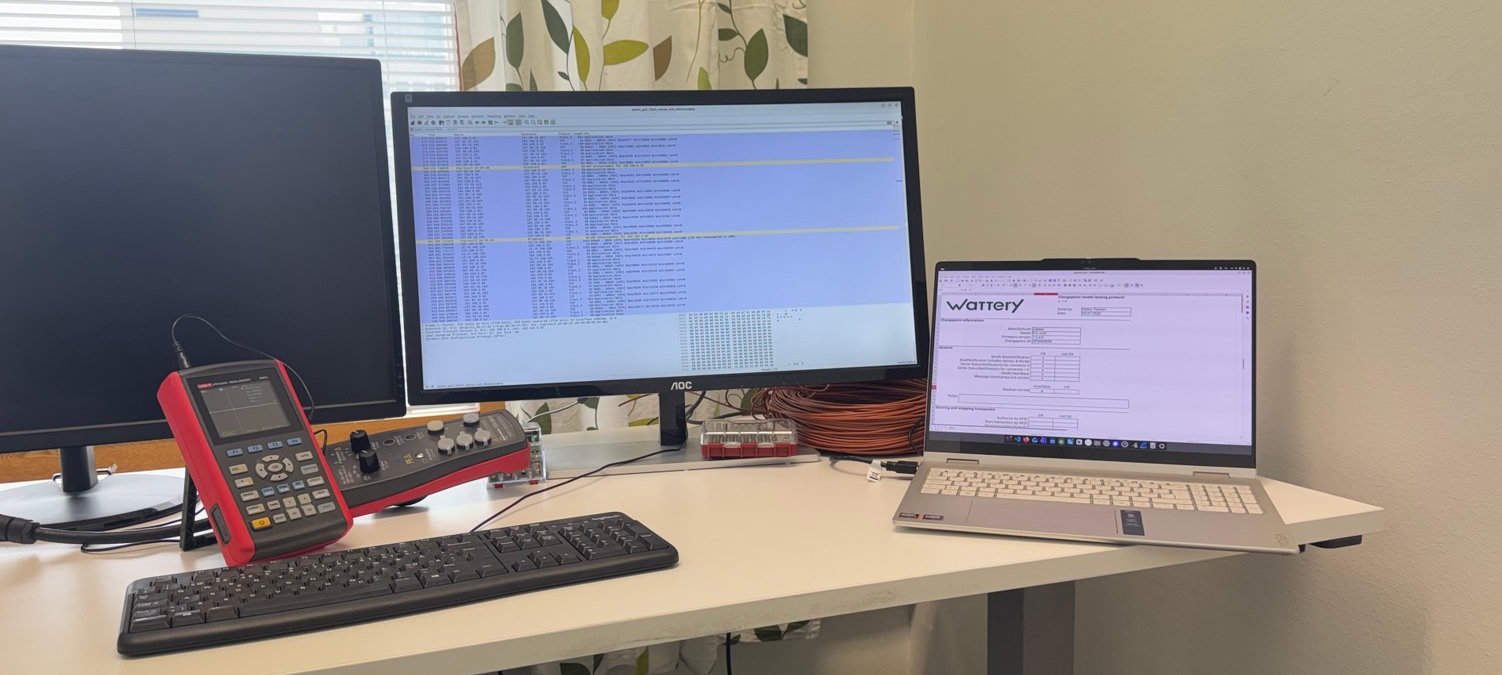
Under test: Zaptec Pro and go-e PRO
Although Wattery does not sell chargers, we test them so that you, the customer, can make well-informed decisions. We publish a list of tested chargers on latausinfo.fi (in Finnish).
In this article, we explain our testing methods to give you an idea of everything a charger goes through on our test bench. The article is not intended to favour any particular manufacturer or model. Every charger on our list has successfully undergone similar tests, following the test method in use at the time. These chargers were selected because they happened to arrive at our test bench while this article was being written. Both passed the test and are now officially supported by the Wattery system.
What do we look at?
When a charger arrives at our test bench, we examine many different aspects. The most important, of course, are its OCPP implementation and its suitability for our load management system. We also review the installation method, the overall impression of quality (to the extent that this can be judged visually), and how much network traffic the charger generates and where that traffic goes. Ideally, the charger sends only OCPP messages to the designated OCPP address. In practice, however, manufacturers often operate their own cloud services in the background, and the charger connects to them.
Assessment criteria
Traditionally, we have assessed chargers in very binary terms: suitable or unsuitable. Openness, however, is not a binary matter; there are nuances. We have therefore decided to give chargers an openness rating on a scale of ★☆☆ / ★★☆ / ★★★. A charger cannot earn even one star without a direct OCPP connection from the charger to the server.
One star is awarded for each of the following:
The general OCPP implementation is sensible. It does not have to be perfect, but it must work.
Load management works using OCPP Smart Charging profiles.
You can set the charger''s OCPP address yourself, and the charger works without the manufacturer''s cloud service.
Criticism of a charger''s openness does not mean that the charger is bad. We do, however, want to show how different manufacturers view the charging market and its openness. We want to give you that information!
What language does the charger speak — and do we understand each other?
The basic assumption is that chargers communicate using the OCPP protocol, primarily version 1.6. People from the UK and the US may nevertheless have slightly different ideas about how certain words are pronounced, and so do chargers. The standard defines the structure precisely, but some messages, for example, are optional. We therefore need to verify which messages a charger sends, which ones it can receive, how quickly it responds to them, and so on. For Wattery, the most important of these are load management messages. We also check the signal sent by the charger to the "car" — in our case, a tester connected to an oscilloscope. This lets us confirm that the car really receives the signal the charger claims to have sent. When we instruct charging to drop to 10 amps, we can quickly and easily see how the charger passes that instruction on. OCPP testing is our most important and longest test, and it also reveals any exceptions that need to be handled.
Under the OCPP standard, a charger does not have to obey load management messages to qualify as an "OCPP charger", because those messages are optional. From our perspective on openness, however, support for load management messages is a requirement. If a charger does not accept them, the customer is effectively locked into the manufacturer''s own load management solution and, consequently, into its equipment ecosystem.
Disconnecting from the cloud

Wattery water bottle on a rock beside a calm sea and wooded island
A word about manufacturers'' cloud solutions
We want to make one thing clear from the outset: we have nothing against manufacturers'' cloud services. On the contrary, they are often useful for many reasons. Manufacturers get a direct view of how a charger is operating, can update charging stations remotely (which can also be done over OCPP), and can provide support even when the chargers are connected to a third-party backend system. This is an especially valuable benefit during the warranty period. Both devices in this test have their own cloud service to which the charger connects. In a charger, this is a feature, not a defect.
When it comes to software updates for charging equipment, we would like manufacturers to publish updates in a way that allows third parties such as Wattery to update the software without action by the manufacturer. We continuously update chargers for which the update files have been made available.
The question we ask on our test bench is: "Am I locked into the manufacturer?" In other words, is the manufacturer''s cloud service required for the charger to work?
- A cloud service that adds value is a good thing.
- A cloud service that locks you in is a bad thing.
The first is a feature that may even be worth paying for; the second is a restriction best avoided.
Our tests include a time machine. We jump ten years into the future, to a point when the device manufacturer''s cloud is no longer available. We pull an old charger out of the cupboard and connect it to the internet. We simulate this by blocking the charger from connecting anywhere except to our own server. Every connection to the manufacturer''s cloud is cut off, and the device is tested again in the same way. In certain cases, calls to an external time server, for example, may be allowed if they can be replaced locally when necessary. The main goal is to see whether the charger works normally without a connection to the manufacturer: does it start, authenticate, charge, and so on? Everything that works in 2026 must also work in 2036.
We monitor network traffic continuously to see where the charger attempts to connect. All local-network and outbound packets are recorded during charger startup and charging. We then examine which connections are necessary and which can be blocked. This method is not foolproof: if a charger has a SIM card supplied by the device manufacturer, we cannot analyze the traffic sent over the mobile network.
Under test: Zaptec Pro
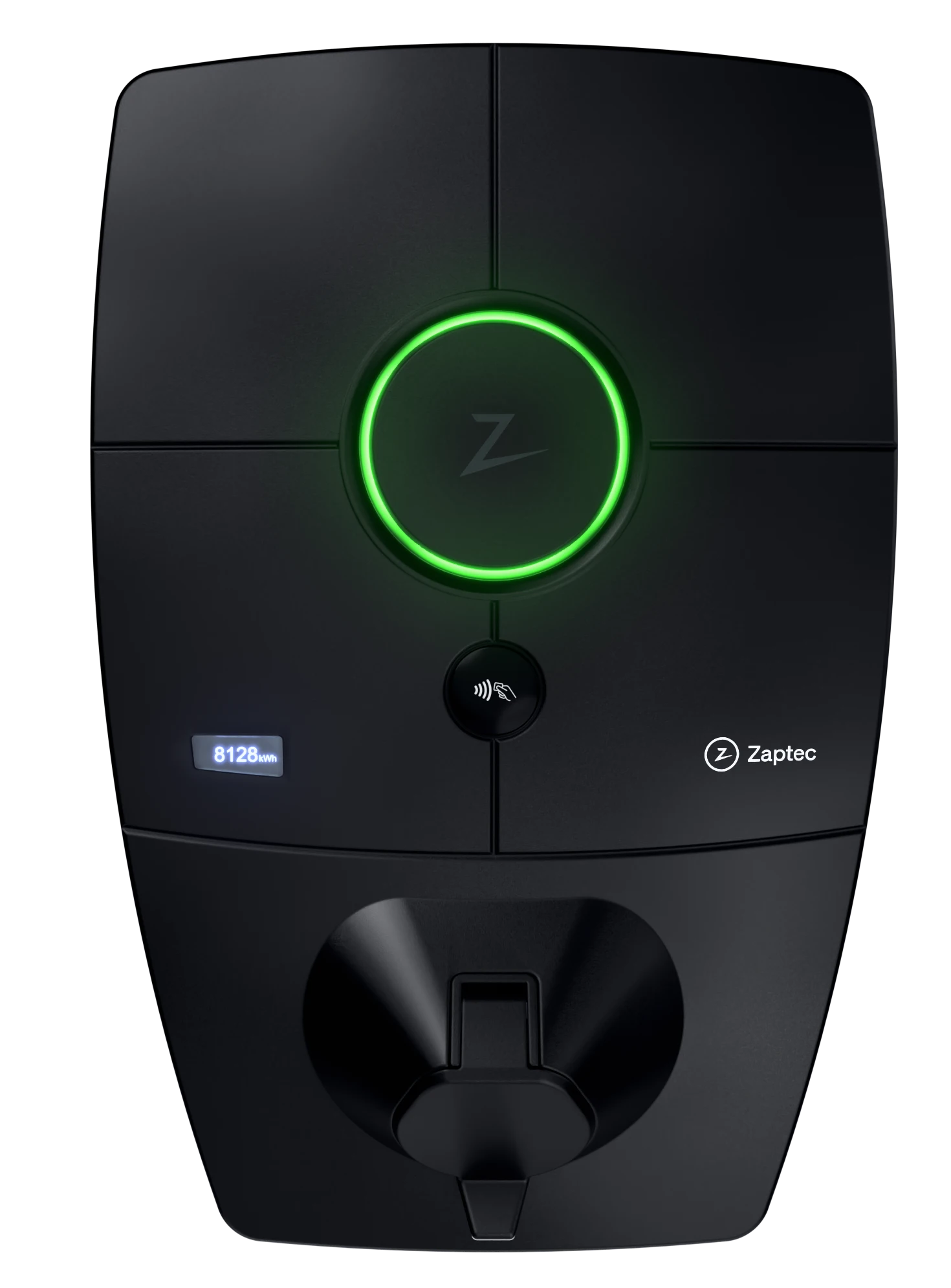
Zaptec Pro charger illuminated by a green status ring
Chargers made by the Norwegian manufacturer Zaptec have gained a strong foothold in the market. There are several reasons for this: high-quality devices, a good support network, and easy commissioning. Until now, Wattery has not supported these devices. A software update has now given the chargers a direct OCPP capability, meaning that the device can connect straight to Wattery without going through Zaptec''s intermediary server. The software update is available for newer Zaptec Pro chargers, but check your serial number on Zaptec''s website before updating. This direct OCPP connection enables everything we at Wattery have been talking about for a long time. Zaptec, too, has long said that this feature was coming — and now it is here!
Zaptec''s OCPP implementation is extremely clean. The charger follows messages as it should, and the manufacturer''s documentation makes the operator''s job considerably easier.
Zaptec Pro is commissioned through Zaptec''s portal. This is an easy and quick way to commission chargers, but it brings one challenge: using OCPP 1.6J at box level — that is, establishing a direct OCPP connection — requires permission from Zaptec. A DIY user cannot enable it independently and must request permission from Zaptec. The criteria on which Zaptec grants that permission today, and especially in the future, remain to be seen, but Wattery currently has permission. If someone wants to use Operator X instead of Wattery, they must make sure that X has the necessary permissions. The feature is free today, and there is no indication that it will cost anything in the future, but the risk exists. If Zaptec restricts access to certain "approved" operators, the installed device base becomes closed again. Devices that have already been moved away from the manufacturer''s cloud cannot be forced back if their cloud connections have been cut, but no new devices could be added either. That is why our "time machine" test is extremely important. It is worth switching the native OCPP connection on right away, not ten years from now.
As for Zaptec''s cloud, the charger connects continuously to its own cloud service. A large proportion of the ongoing traffic goes to the manufacturer''s cloud. In our test, this was not a software update; it was ordinary traffic and diagnostic data sent to Zaptec. This cannot be switched off, but the messages can be blocked by restricting the charger''s access with a firewall, for example. As we have noted several times, the charger also works without this connection. However, because Zaptec''s cloud adds value, there is no need to disconnect it.
The Pro also has a built-in SIM card. This has been a good selling point, but "free" and "lifetime" do not usually sit comfortably in the same sentence — especially if connections to the manufacturer''s cloud have been cut. For that reason, we always recommend providing chargers with access to the local network over Wi-Fi.
Zaptec Pro – openness rating
2 / 3
Zaptec''s workmanship shows that this is a heavyweight manufacturer capable of telling a convincing story about quality through its product. This impressive charger has become very popular, and for good reason. Our only reservation concerns Zaptec''s permission policy. For that reason, we deduct one star.
Under test: go-e Charger PRO
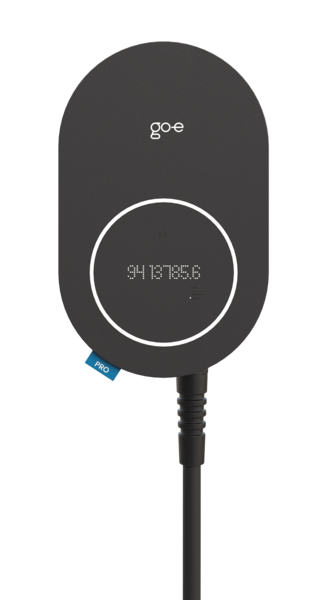
go-e Charger PRO unit connected to the Wattery test bench
In the interests of openness, the unit tested was a go-e Charger CORE, which does not have MID approval. All its other functionality is identical to that of the go-e Charger PRO, however, so we will continue to refer to the PRO.
The Austrian manufacturer go-e is known for its Gemini range, which has long been one of the best-selling home chargers on the market. The Gemini has not had a MID meter, however, which has made it unsuitable in Finland when users are billed for charging — for example, in housing companies (taloyhtiö) and workplaces. go-e''s philosophy has always been to provide cutting-edge technology openly, and its chargers have included interfaces for a variety of systems. It has continued the same approach in the Charger PRO and CORE models. From an installer''s perspective, the new PRO and CORE are the same familiar and reliable charger, improved and dressed in new clothes.
The go-e PRO''s OCPP interface is also very well implemented. It passed every functional test. We observed inconsistencies in certain messages: during startup, the charger sent several BootNotification messages. In addition, it was not always possible to request a MeterValues reading separately.. Neither issue affects charging or billing, and both are the sort of thing usually corrected in software updates.
Where go-e really stands out is openness. The charger sent no data anywhere except to the OCPP server to which it was connected: nothing to the manufacturer''s cloud and no background telemetry. The only outbound traffic was a ping to check the internet connection. With the other connections cut, the charger started, authenticated, and charged normally.
You can switch different interfaces on and off, and everything is documented thoroughly and publicly on GitHub. You can manage the charger however you like — for example, with Wattery :-).
One point needs to be considered during planning — or, more realistically, during commissioning: we observed heavy local-network traffic from the go-e charger. The charger continuously announces its presence on the local network by sending multicast announcements about twice per second, even when it is doing nothing. These announcements account for 89% of all network traffic generated by the charger, and its total local-network traffic is about ten times that of the Zaptec Pro. This is not necessarily a problem; the quantity of data is small, but every device has to process the messages. We asked go-e about this, and the company said that the behaviour is intentional and causes no issues even at sites with several chargers. It is nevertheless worth noting.
We recommend separating the chargers from the internal network using a VLAN. This also addresses the fact that the local interface has no password by default.
go-e Charger PRO – openness rating
3 / 3
The go-e Charger is for people who value openness. go-e sells you a charger that you genuinely own and can do whatever you want with. As advocates of openness, we are delighted to assess devices like this.
Conclusion
In this article, we have tested chargers from two device manufacturers and explained our methods so that you know what happens behind the scenes. The criticism and praise reflect the current situation with these chargers. Things may nevertheless change with future software updates.
We have not assessed the devices'' electrical characteristics, which must always be reviewed for each installation. These include, for example, the device''s protective equipment, daisy-chaining capability, and internet connectivity. The test period also does not account for the devices'' susceptibility to faults, such as cable-locking problems, meter faults, or connectivity issues.